 Evil Genius Labs
How we build
From "this is broken" to "it's alive."
Every tool in the lab went through the same six steps. This is the story of how a problem becomes something people use every day.
-
Step 1
Something is broken.
It always starts with a person and a problem. Not a pitch for a product. An agent who can't get a photographer. A manager buried in leave paperwork. A family three weeks from losing a house.
-
Step 2
We take it apart.
Before we build anything, we find out what already exists, who's tried, what it costs and where it breaks. If something good is out there, we use it. We only build what's missing.
-
Step 3 · Sam
Sam gives it a face.
What should it do, how should it feel, and what's the least someone has to learn to use it? Sam designs every screen around the person on the other end, not the feature list.
-
Step 4 · Ryan
Ryan brings it to life.
The design becomes a real thing that works. Fast, safe, backed up, cheap to run and easy to fix. The parts nobody sees are the parts that keep it standing.
-
Step 5
We try to break it.
Then we attack our own work. The same photo runs again and again until we know the room stays the room. Only what holds up ships.
-
Step 6
It's alive.
It ships, people use it, and we keep it running. Then we listen for the next thing that's broken.
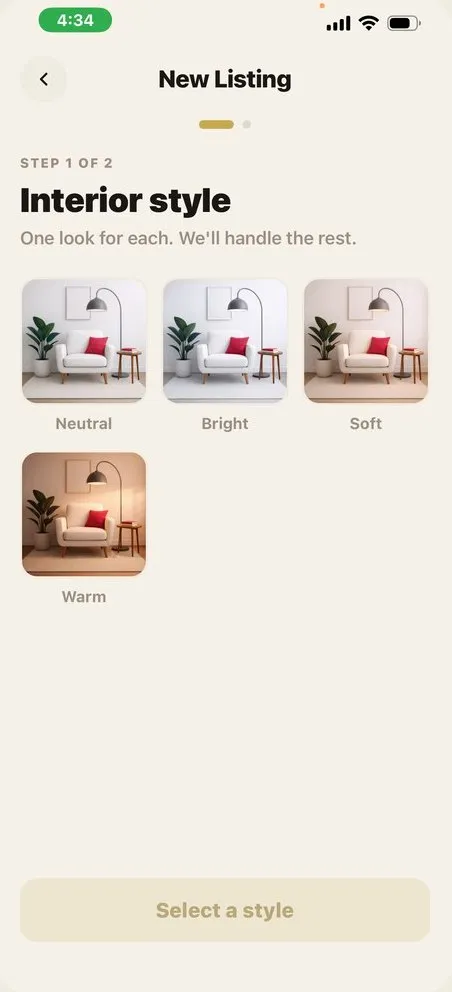
 Luster
 Beyond
 Leave
The parts bin
What we build with.
No limits on the industry. These are the parts we've already shipped, and where you can see them working.
Phone apps
From the camera to checkout, on the App Store.
See it in LusterWebsites that do the work
Search, calculators, wizards and forms that reach the right person.
See it in BeyondTools for running a business
The everyday work, tracked, reminded and on record.
See it in LeaveAI that keeps the facts
Models put to work where accuracy matters, tested before they ship.
See it in LusterText and email that follow up
Reminders and check-ins that go out on time, every time.
See it in LeaveCloud, security and backups
Systems you own, with sign-ins that hold and backups nobody can delete.
See Ryan's work